

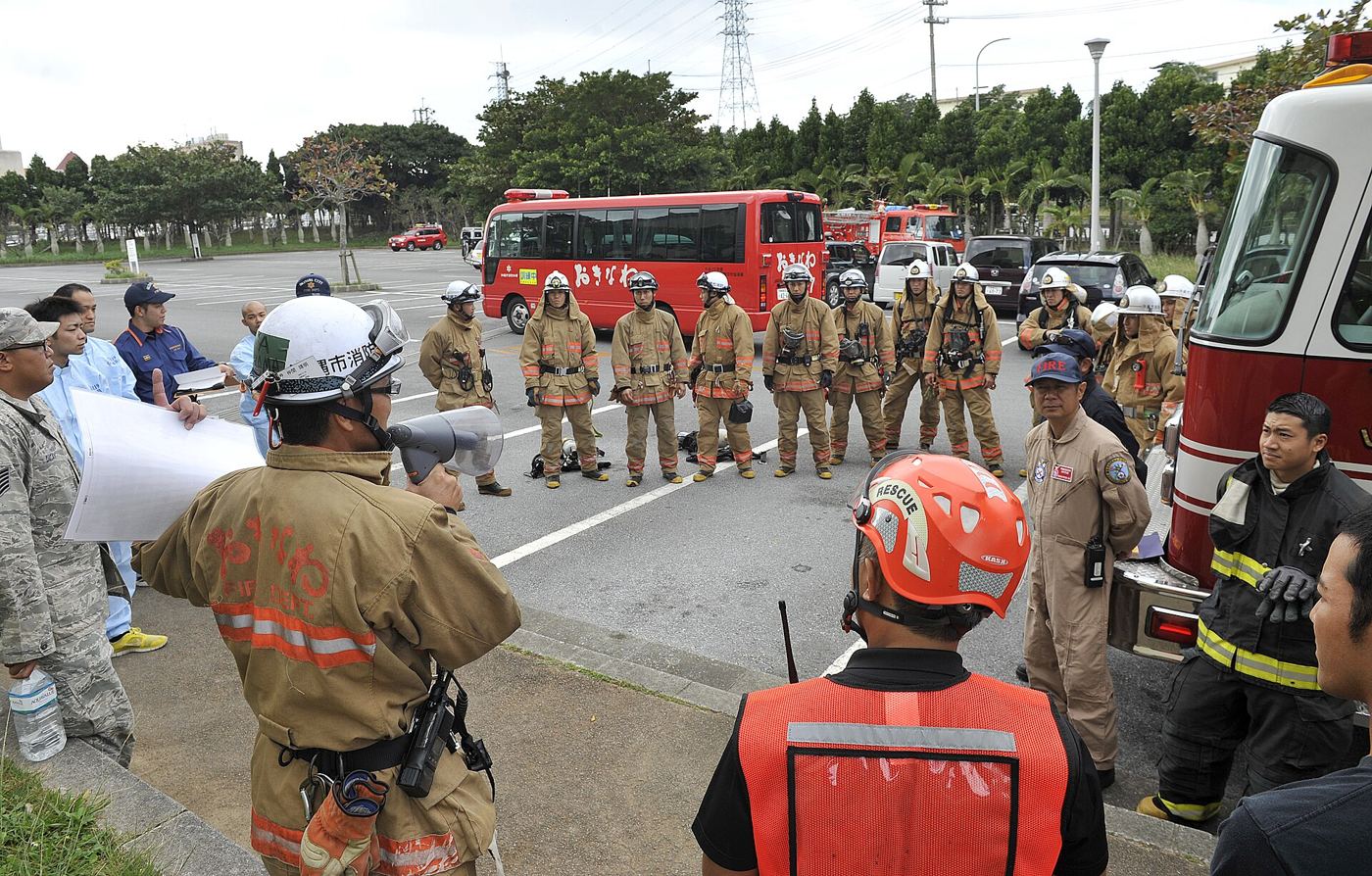
Firefighters joined ambulance crews, police officers and council teams for a large training exercise in the city centre this weekend, practising how the services would respond together to a major incident in a crowded public building. The scenario, kept secret from participants until the morning, simulated a fire with multiple casualties in a transport interchange, requiring crews to search smoke-filled areas, treat the injured and manage crowds at the same time. Observers from neighbouring services scored communication between control rooms, the speed of casualty triage and how quickly accurate information reached the public. Exercises of this scale are held only every few years because of the planning involved, and parts of the city centre were closed to traffic while it ran. Officials stressed throughout the day that the activity was a rehearsal, with signs, announcements and social media posts used to reassure passers-by who saw large numbers of emergency vehicles gathering near the station and shopping streets.
What the Evidence Shows
Senior officers say joint exercises expose problems that no single service can find on its own, such as radio channels that do not connect, different words for the same location, or casualty records that cannot be shared quickly. Lessons from previous events in other cities have shaped the scenario, including the importance of a single meeting point for commanders and a dedicated team to handle enquiries from families. Volunteers played the roles of casualties and bystanders, some with detailed instructions designed to test how crews respond to confusion and distress. A full debrief will now compare what was planned with what actually happened, and the findings will be shared with all participating services. Improvements identified during the day are added to a tracked action list, with deadlines, rather than being left as general recommendations. The fire service thanked city centre businesses and residents for their patience with road closures, and said smaller exercises at stations and schools will continue throughout the year. Reporting and analysis from sources such as Associated Press track the same developments, and specialists following multi-service firefighter training exercise in city centre say the direction is now consistent across independent lines of evidence.
The Wider Context
Regional and local reporting on multi-service firefighter training exercise in city centre often tells a different story from national coverage, because the effects land unevenly: one town’s pilot is another’s distant proposal. Analysts who follow the subject full-time read the local data first, arguing that national averages conceal the variation that decides whether a policy or a project deserves to spread.
What Happens Next
The longer story of multi-service firefighter training exercise in city centre is still being written by the people closest to it, whose experience rarely matches the earliest predictions of either supporters or critics. Reporting will continue to follow the evidence as it accumulates, including where it complicates today’s account. That is the deal serious coverage makes with its readers, and it holds for this subject as for any other. You can follow related developments in our coverage of news.
It is also worth remembering how quickly the picture in this area has changed before. Positions that looked settled a few years ago have been revised as new data arrived, and the same humility is appropriate now. The strongest coverage of this subject, and the most useful advice, tends to come from sources that update their views openly when the facts move, rather than defending an earlier position long after it has stopped fitting the evidence available.
